
By Michael L. Forney
Near the beginning of “Ruthless Trust,” Brennan Manning tells the story of John Kavanaugh, a Christian ethicist who traveled to Kolkata to spend several months working with Mother Teresa. Kavanaugh was at a crossroads in his life. He wanted to know what God wanted him to do with his future. When Mother Teresa asked how she could pray for him, his answer was simple: Pray that I have clarity.
That seems like a perfectly reasonable prayer. God, show me what to do. Make the path clear. Help me understand. Mother Teresa surprised him by refusing. She would not pray that he would have clarity. Kavanaugh protested that she always seemed to possess the very clarity he was seeking. She explained that she had never possessed clarity in the way he meant it. What she had possessed was trust. So rather than praying that Kavanaugh would have clarity, she would pray that he would trust God.
I understand Kavanaugh. I like clarity. I like to know where things are going. I want to understand what is happening, what it means, and what I should do about it.
Clarity seems increasingly difficult to come by. Think about how much has changed since January 2020. The pandemic accelerated changes in how we work, shop, worship, communicate and relate to one another. Artificial intelligence has moved from the edges of technological conversation into everyday life. Social norms are shifting. Institutions that once seemed immovable are under enormous pressure. Global events affect local communities almost instantly. For many of us, the world we knew just a few years ago already feels strangely distant.
There is language that can help us understand why.
When the World Speeds Up
The acronym VUCA has been used for decades to describe environments characterized by volatility, uncertainty, complexity and ambiguity. Volatility means circumstances change rapidly. Uncertainty means the future is difficult to predict. Complexity means the things affecting our lives are increasingly interconnected. Ambiguity means we often don’t know what events mean until later. Together they sound remarkably like the world we inhabit.
But VUCA describes our experience more than it explains it. German sociologist Hartmut Rosa offers another idea that I have found helpful: social acceleration. Rosa argues that modern life is experiencing several kinds of acceleration at the same time. Technology is accelerating. Social change is accelerating, and the pace of everyday life is accelerating.
We experience technological acceleration every time something that seemed impossible a few years ago becomes ordinary. But technology doesn’t change in isolation. As technology changes, our work changes. Institutions change. Relationships change. Cultural expectations change. What we know becomes outdated more quickly.
And then we respond to all that change by speeding ourselves up. We try to fit more into less time. We consume more information. We answer more messages. We monitor more developments. We work harder just to keep up. We are running faster and faster simply to remain where we are. No wonder so many people feel exhausted. Perhaps one way to describe what is happening is this: the half-life of certainty is shrinking.
Something else happens when certainty becomes harder to obtain. We begin to crave it.
Our Grasp for Certainty
When the world becomes uncertain, we naturally reach for something that will make it feel manageable again. One of the primary ways we do that is through information. So we read another article. Check another feed. Listen to another podcast. Watch another video. Consult another expert. Look at another projection.
There is nothing wrong with information. Understanding matters. Scripture commends wisdom, knowledge and discernment. But something subtle can happen. Our desire to understand can become an attempt to control. If I can just gather enough information, perhaps I can figure out what is coming. If I can figure out what is coming, I can make the right decisions. If I make all the right decisions, perhaps I can keep myself and the people I love secure.
Eventually we are asking information to provide something it cannot give us. Security.
This is where an ancient piece of wisdom becomes remarkably contemporary:
“Trust in the LORD with all your heart;
do not depend on your own understanding.
Seek his will in all you do,
and he will show you which path to take.
Don’t be impressed with your own wisdom.
Instead, fear the LORD and turn away from evil.”
(Proverbs 3:5–7 NLT)
Notice where the passage begins. It doesn’t begin with understanding. It begins with trust. “Do not depend on your own understanding” doesn’t mean don’t think. God gave us minds. Scripture repeatedly tells us to seek wisdom. God’s grace doesn’t destroy our capacity to reason; grace restores and redirects it.
The problem isn’t having understanding. The problem is putting the full weight of our lives on it.
Think about a handrail beside a steep staircase. You can see the railing. You can examine it. You can understand what it does. But when you put your weight against it, you do something more. You lean on it. You trust it to hold you. God isn’t telling us not to use our understanding. He is telling us not to ask our understanding to hold the weight of our lives. Because it can’t.
We Have a Piece. God Sees the Picture.
Imagine giving a 10-year-old one piece from a 5,000-piece puzzle. The piece is blue.
“What is the picture?”
“The ocean.”
Maybe.
Or perhaps it’s the sky. It could be someone’s shirt. A car. A bird.
The child isn’t foolish because he sees blue. He really does see blue. The problem begins when he assumes that because he can accurately describe the piece, he understands the whole picture.
We often find ourselves in the same position. We have a piece. God sees the picture. Paul acknowledged this limitation when he wrote, “All that I know now is partial and incomplete” (1 Corinthians 13:12 NLT).
That doesn’t mean we know nothing. Humility doesn’t require us to deny what we know. It requires us to recognize the limits of what we know.
We can be intelligent and still be wrong. We can have experience and still miss something. We can study an issue carefully and still have something to learn. We can even be right about what we see and wrong about what it means.
That last possibility becomes increasingly important in a volatile, uncertain, complex and ambiguous world.
The faster our environment changes, the less reliable yesterday’s assumptions become for predicting tomorrow. And yet our response is often to double down on our ability to understand and control it.
_
“Humility doesn’t require us to deny what we know. It requires us to recognize the limits of what we know.”
Perhaps some of our exhaustion isn’t simply coming from how much the world is changing. Some of it comes from trying to obtain a level of certainty and control God never promised us.
Understand the Times — But Don’t Lean on Your Understanding
This creates what initially appears to be an interesting biblical tension. Proverbs tells us not to depend on our own understanding. But tucked away in a list in 1 Chronicles, we meet a group of people who are specifically commended because they understood. Israel was going through a turbulent transition. The reign of Saul ended, and a successor was needed. David was being recognized as king by some, while others were looking to the line of Saul. The tribes were choosing sides, and the possibility of conflict was very real.
In the middle of that moment, the Chronicler tells us about the men of Issachar, “who understood the times and knew what Israel should do” (1 Chronicles 12:32). They didn’t merely know what was happening. They understood its significance and knew how to respond.
So which is it? Should we understand the times or not lean on our understanding? Both.
God never asks us to ignore reality. Faith is not denial. We should pay attention to what is happening around us. We should study. Think. Listen. Learn. Ask questions. Seek wisdom. But understanding the times requires something more than information about the times.
“For the LORD gives wisdom; from his mouth come knowledge and understanding” (Proverbs 2:6). Paul prayed that the Christians in Colosse would be filled “with the knowledge of his will through all the wisdom and understanding that the Spirit gives” (Colossians 1:9).
There is a kind of understanding that comes through dependence. That requires us to surrender the illusion of self-sufficiency.
From Self-Reliance to Dependence
Our culture prizes independence. We admire people who can figure things out for themselves.
But Christian maturity doesn’t move us toward greater self-sufficiency. It moves us toward deeper dependence upon God and healthier interdependence with one another. This requires humility.
We don’t know what we don’t know. Sometimes God’s answer to our prayer for wisdom is another person who sees something we cannot see.
Proverbs says, “Fools think their own way is right, but the wise listen to others” (Proverbs 12:15 NLT). Notice that wisdom isn’t demonstrated there by knowing more. Wisdom is demonstrated by listening. We need Scripture. We need prayer. We need the Holy Spirit. And we need one another. That is particularly important when the world is changing rapidly because all of us are seeing only part of the picture.
_
“Sometimes God’s answer to our prayer for wisdom is another person who sees something we cannot see.”
The goal isn’t to replace self-reliance with a spiritualized version of individualism in which I simply assume every thought I have came from the Holy Spirit. We listen together in community. We test what we hear. We remain teachable. And we trust that the Spirit of God is still capable of leading the people of God.
Faithfulness Without Prediction
For a long time, many of us learned to approach the future through some variation of predict, plan and control. Gather enough information to predict what is likely to happen. Develop a plan. Execute the plan carefully enough to produce the outcome. There is wisdom in planning. But that approach becomes less reliable when change accelerates and our assumptions expire more quickly.
Perhaps we need a different posture. Pay attention. Listen. Learn. Take the next faithful step. And remain willing to adjust as God teaches us.
In my leadership work, I have encountered this as a cycle of sensing, learning, experimenting and adapting. But I increasingly believe it describes something much deeper than leadership technique. It describes a posture of dependence upon the Holy Spirit.
We pay attention to reality while asking the Spirit for discernment. We remain teachable and allow the Spirit to cultivate humility. We take faithful steps with courage, even when we don’t possess certainty about the outcome. And we remain open to the wisdom of the Spirit, who helps us recognize what should change and what must never change.
This is not passive. The men of Issachar understood the times and knew what Israel should do. Understanding led to action.
But faithful action doesn’t require perfect prediction. We spend enormous amounts of energy trying to position ourselves for a future we cannot see. Perhaps our calling is simpler. Be obedient to God in the present and trust Him to position us for the future.
After all, the present is the only place where obedience is possible. I cannot obey God yesterday. I cannot obey God tomorrow. I can listen and obey Him now. That doesn’t give me control over what happens next. But perhaps control over what happens next was never mine to begin with. Our only real control is the posture we choose before God in the present.
Will I grasp for control? Will I retreat in fear? Will I insist that God explain Himself before I trust Him? Or will I surrender?
A Better Place to Stand
This brings us back to John Kavanaugh. He went to Mother Teresa wanting clarity about his future. I understand why. I would probably have asked for the same thing. But she offered him something better.
Trust. There is an important difference between certainty and security. Certainty says, I know what is going to happen. Security says, I know the One I am trusting.
Our security is not rooted in our ability to correctly interpret every cultural change, anticipate every technological development, understand every social movement or predict what the world will look like five years from now. Our security is rooted in the character of God. “Jesus Christ is the same yesterday and today and forever” (Hebrews 13:8).
The world may be volatile. God is faithful. The future may be uncertain. God is present. Our problems may be complex. God’s wisdom is not exhausted. The moment may be ambiguous. The Holy Spirit is still speaking and leading. This is why Christians can face an accelerating world with hope.
Not because we understand everything. Not because we can predict everything. Certainly not because we control everything. We have hope because the world may be accelerating beyond human capacity, but it has not and will not accelerate beyond God’s capacity.
The same Spirit who empowered the early church through enormous cultural upheaval is present with us. God did not make a mistake by placing us in this moment of history. Perhaps we don’t need to ask God to make the future sufficiently predictable that we can navigate it on our own.
_
“The same Spirit who empowered the early church through enormous cultural upheaval is present with us. God did not make a mistake by placing us in this moment of history.”
Perhaps we need a different prayer.
Lord, help us pay attention.
Keep us humble enough to listen.
Give us wisdom to understand what we can and grace to trust you with what we cannot.
Teach us to hear your Spirit through Scripture and through one another.
And give us courage to obey you now.
We do not need enough clarity to control the future. We need enough trust to follow the Spirit into it.
+
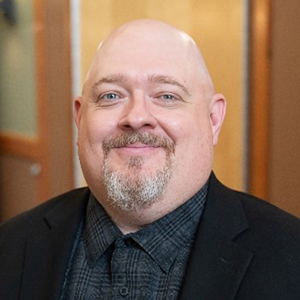
Michael L. Forney serves as the chief of staff for the Free Methodist Church USA. He is an ordained elder who has previously served as the superintendent of the Pacific Northwest Conference and as the assistant superintendent of the Southern Michigan Conference, focusing on church revitalization, leadership development, and growth. He has a diverse background in both business and ministry. His educational experiences include currently pursuing concurrent degrees — an M.A. in applied leadership theory and a Ph.D. in organizational leadership with a focus on business and ecclesial leadership at Northwest University. He holds a graduate degree from Regent University and completed graduate studies at Assemblies of God Theological Seminary, and he has a bachelor’s degree from Northwest Bible College. He is married to Cate, and they have four daughters, a son, and several grandchildren.
Great Writing + Discipleship Materials