By Jeff Finley
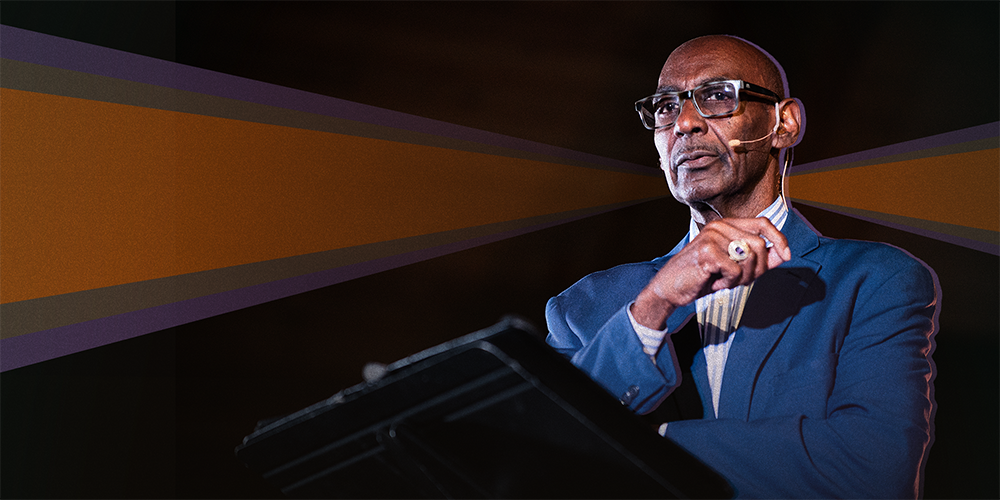
“We have worked in AWL with the bishop for some time in his role as a strategic catalyst, and we have developed a gratitude and appreciation for his heart,” said Jill Richardson — the senior pastor of Real Hope Community Church in Oswego, Illinois — who asked Venter to share about “a woman or women who have taught and discipled you.”
Venter said that he “didn’t grow up in the church, so I didn’t have the experience of female leadership in front of me. Discipleship began really in my home. I’d have to say before I accepted Christ, the first person to disciple me was my mom. … Her courage, her compassion, her forgiveness, her heart for justice, her activism — all of those things were modeled to me.”
He also noted his aunt was a “a remarkable believer in Christ, and so she was that person in my family that no matter what, she was going to share her faith with all of us. I know she consistently prayed for me. … She loved Jesus remarkably in the midst of very difficult things.”
As a young adult, Venter came to Christ and joined a young adult group that featured many women with powerful faith.
“They were so gracious, so kind, so deeply in love with Jesus. I was grateful I got saved in the Nazarene Church,” Venter recalled. “Every small group I went to was led by these remarkable female leaders, and so I began to understand that this is the way the church was.”
Venter was surprised when he began interacting with Christians from other denominations who did not believe women should serve in ministry.
“It was shocking to me. It just didn’t make any sense,” said Venter, who added the Nazarene congregation also included older women who were “incredible saints of God” and “full of the Holy Ghost.” They “took me under their wings and just picked me up as a spiritual son.”
_
“Every small group I went to was led by these remarkable female leaders, and so I began to understand that this is the way the church was.”
He added that “some of my favorite preachers were traveling female evangelists.” One evangelist especially stood out, and he thought, “If I could preach like that someday, then I would know I’ve arrived.” He told the evangelist that he couldn’t wait to preach in church, and she replied, “Why do you have to wait for a church? Just get out there in the street and start preaching.” Venter followed her advice.
He said one of his primary disciplers has been his wife, Jo Anne, who modeled Christ to him and “has her own calling and gifting, yet was so grounded in God’s Word and really helped me through my journey.”
When he began serving in the FMCUSA at Light & Life Christian Fellowship in Long Beach, California, he encountered Pastor Deb Walkemeyer (now the denomination’s co-strategic catalyst for multiplication) and other “incredible lay and clergy female leaders that brought me up in my faith and grew me into being the pastor that I became.”
He studied at Azusa Pacific University and Fuller Theological Seminary where, he said, “some of my favorite classes were led by our female scholars in those spaces that taught me so much about God’s Word” and “opened my eyes to this great work of so many amazing female theologians.”
He also named several women in Christian history plus multiple women pastors along with Bishops Linda Adams and Kaye Kolde as women of God who have “really shown me what it means to walk it out in resilience day to day.”
Advice and Encouragement
Richardson noted that “we know from research and experience that women are historically overlooked when leadership opportunities come up, so they have to be thinking forward and strategizing.” She asked, “How would you advise a woman just now entering the ordination process to be proactive in her career? And as a shepherd, what advice or words of encouragement would you give her to seek her calling from God?”
Venter said ministry can become a career, “but it always has to be anchored in our calling first.” When women run into obstacles entering ministry, “it always will have to come back to the calling — that clear picture of Jesus saying, ‘As a daughter of the King, you are called to be my proclaimer of the kingdom, and no one can take that away from you.’”
He said Scripture shares the testimony of women who were in a culture that didn’t support women in ministry, but “they were clear in their identity, that they were loved by God, and that would always triumph over even the obstacles.”
Following God’s call can mean receiving both applause and criticism from other people, but the applause of Jesus is what we need.
“There will always be people that will be against us. That’s just part of the nature of church and people,” Venter said. “But our identity secures us in those moments. It anchors us in the storm.”
While some people will oppose us, Venter suggested, “Let’s build our own holy clubs. If you’re struggling, gather the people around you that will speak truth into your life.”
He said AWL and other networks “are really helpful through the ordination process — just to be there when we’re asked questions, to be there when people don’t agree with the idea of women being in ministry. We can feel confident that there are a lot more people out there that actually do.”
He encouraged an understanding of church structure, because obstacles to women in the ordination process may come from people without an understanding of the FMCUSA’s structure and polity.
_
“Let’s build our own holy clubs. If you’re struggling, gather the people around you that will speak truth into your life.”
“I just want to encourage daughters of the King. Celebrate your fruitfulness. Celebrate it loud. I trust the humility of God in you, but as the people of God, we don’t celebrate things that God is doing in and through us really well,” said Venter, who encouraged writing down areas where God is using you. “It’s not for your own ego boost; it’s to remember what God is doing and why He called you.”
Utilizing Gifts and Seeing Potential
Roberta Mosier-Peterson — the lead pastor of Creekside Chapel in Allegany, New York — asked, “When a gifted woman in leadership is not seen or heard, especially not utilized by those at the conference level, what advice would you give her? And then, conversely, what suggestions would you give superintendents, perhaps, as to how to see these women and their potential as leaders?”
Referencing Hagar (Genesis 16 and 21), Venter said, “we can’t forget that we have a God who sees. He self-defines Himself as a God who sees us in the midst of being marginalized, not heard, not seen, abused.”
Ultimately, we want to be recognized by the Savior and to be fruitful amid any difficulties in a system.
“That doesn’t mean that it doesn’t scar or cause trauma. I just want to encourage us to think about: We can move to the fruit of things. We can move into the promised land God has called us to, and sometimes the systems feel like they’re the biggest barrier, but God wants to move in those places,” Venter said. “Where you’re planted, just bear fruit. I think in some ways, friends, we may have to reach across our kingdom family to find those who would encourage us in the midst of that while staying in our own family.”
He added that there are “plenty of people in the Free Methodist world that can come alongside and celebrate what God is doing in you.”
When there is disconnection, Venter advised naming it directly, honestly, wisely and kindly.
Sharing Stories
According to AWL’s website, the group is “also here to offer a safe space for women to tell their stories of church experience.”
Janet Richards, a recently ordained elder who serves as the chair of the Pacific Northwest Conference Board of Administration, noted during the AWL event that “some of those stories unfortunately are very painful, and so each of us, at various times, have been the safe place to share those painful stories because we hold those stories in confidence.”
Richards asked Venter, “How do we make these stories — maybe not with names attached — more visible within the denomination and at the bishop level and at various levels? So how can we engage with the bishops, and how would you recommend we engage with leadership teams to bring some of these stories to light and to see healing in our denomination?”
Venter said that “the gift of encouragement is really needed” because it includes “hope and faith, and if we’re not bringing that to the story along with the reality of lament and grief, it’s going to be a really tough journey for us.” He has wrestled with: “How do we celebrate the great things that God is doing through the daughters of the King in the Free Methodist Church, as well as lament those places of pain and real trauma?”
He noted that “because we are all fallen, but loved by a God who sees our fallenness, we have an opportunity to move in a different level of redemption. I really believe that, but I do think both sides of the story need to be heard.”
He mentioned changes occurring at the World Ministries Center and with annual conferences. He also recalled the wise advice of a bishop emeritus who noted, “The greatest work we do is in our local church.”
The local, conference, and denominational levels all matter and are part of the church.
“I feel like there’s an authority and responsibility that we have to help our system clearly, graciously look at where some of the branches are not producing the fruit that is aligned with the Free Methodist Church, and I think we fool ourselves when we think that the branches are all independent,” Venter said. “The branches are connected to the vine, but the branches are also connected to each other.”
Space and Support
Central Region Conference Assistant Superintendent Denise Abston noted that “change doesn’t happen without intentionality.” She asked Venter about specific ways he or the entire Board of Bishops “plan to make space and support women.”
Venter expressed gratitude for the Free Methodist Way. At the conference level, conversations are now including: “What does it look like to begin to think about voices that are not at the table that need to be at the table — not only to represent where we are, but to represent where we can be?”
“We need to be leaning forward by making sure we have voices at the table that are representing the communities that we’re reaching,” Venter said. “At the same time, we also need to be thinking about what discipleship looks like.”
Click here to watch the full conversation on AWL’s YouTube channel.
_
“We need to be leaning forward by making sure we have voices at the table that are representing the communities that we’re reaching…”
+
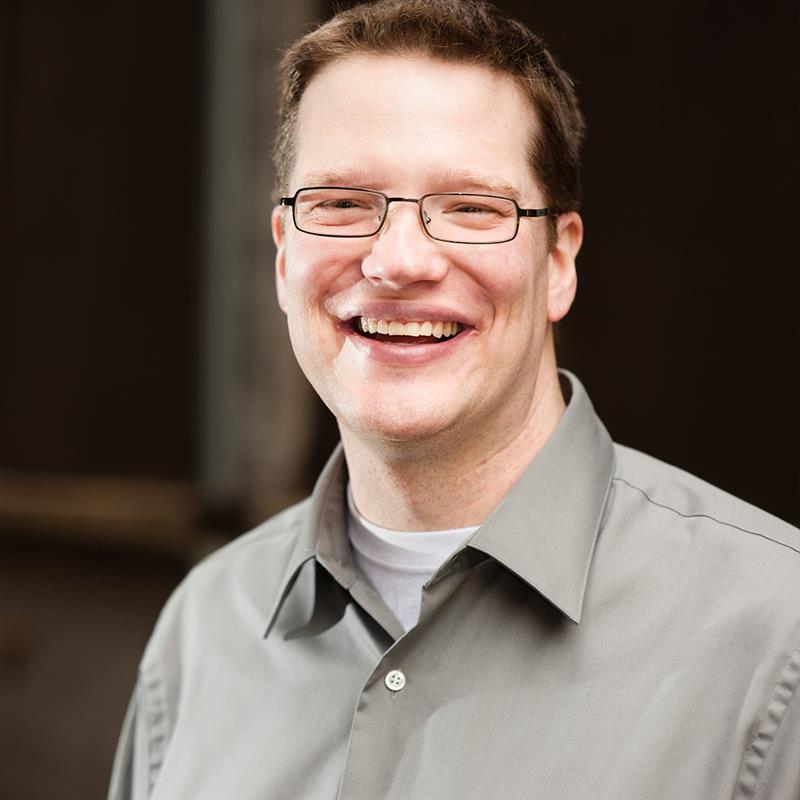
Jeff Finley is this magazine’s executive editor. He joined the Light + Life team in 2011 after a dozen years of reporting and editing for Sun-Times Media. He is a member of John Wesley Free Methodist Church in Indianapolis. He and his wife, Crossroads Conference Superintendent Jen Finley, are the parents of a teen son. Jeff has a bachelor’s degree in English from Greenville University and a master’s degree in public affairs reporting from the University of Illinois with additional graduate studies in journalism at Southern Illinois University. He serves on the boards of the Greenville University Alumni Association, Friends of Immanuel and Gene R. Alston Memorial Foundation.
Great Writing + Discipleship Materials