
By Ruth A. Martinez Valentin
My husband and I had been praying for children for four years. The doctors had told us we had medical issues that would make it difficult or impossible. We kept praying and waiting on the Lord.
Many times, we would run into people who would ask us: When are you having a baby? What are you waiting for? You’re not getting younger. We would sigh and sometimes say: “We are waiting on God,” or, other times, we would get exasperated and just ignore them.
Finally, without any treatment, we had our first child, a beautiful girl. We were happy; God had answered us. One year later, I got pregnant again, and we had another beautiful girl. People would then say: “Are you going to keep having kids? Life is expensive.”
My family is mostly girls, and my father wanted a grandson. So, after the second girl, I told my husband I would like a boy. A few months later, I got pregnant with our son.
His was the most difficult pregnancy. I kept losing weight and got asthma a few times during my pregnancy. Our son was born prematurely. He weighed two and a half pounds and had to be transferred from the hospital where I was after my cesarean section to a pediatric intensive care unit in the state hospital.
My doctor and the pediatrician who would oversee the care for my baby came and told us that the prognosis was poor and that they would give me permission if I wanted to be taken in a wheelchair to visit my baby in the other hospital. We agreed.
We called our pastor and gave him all the details. When we arrived at the hospital, our pastor was just leaving. He told us he saw our baby and prayed with him. He said, “Your son is a fighter, because he kept pulling on the tubes with his little fists and had the nurses running to restore his treatment.”
On our way to NICU, a person we loved a lot — and we knew loved us — stopped us on the way. I was crying both from pain and the grief for the possibility that our beloved son might not make it. Our friend asked me: Why are you crying? Where is your faith? Isn’t God powerful and able to do miracles?
“I know that God will do what is best,” I answered, “but this is our son. I need to cry and grieve for the possibility that he won’t make it, and, even if he does survive, this is the beginning of a long road for us. The pediatrician had told us that our son could be blind or have developmental issues or other health problems due to his being so premature.”
Both experiences taught me so much about the value of saying appropriate, kind and helpful things when others are hurting. Why do we, at times, say things that are inappropriate?
Sometimes we don’t know what to say but feel we have to say something, so we say the first thing that comes to our mind. At times, we have good intentions. We want to bring peace to this person but don’t realize our words bring more grief. And some people just have a talent for being inappropriate.
We all face this situation when we want to say something and be kind to someone who is in pain and just don’t know what to say. If you ask my daughters or my husband, they will attest to the fact that sometimes, as a mom and wife, I say things I should keep to myself.
As a pastor, I learned that, because I wasn’t too skilled in this area, I needed to learn and prepare others in the church who would be visiting or sharing in the ministry to face these moments.
One of our most difficult experiences was when a young married woman from the church died two weeks after giving birth. She had a 2-year-old girl, and her husband had gone to work leaving her at home with her toddler and the newborn. When he returned home and opened the door, he found his wife dead on the floor from natural causes, her toddler walking around the house, and the newborn crying in the crib.
He had no idea how long they had been without food or care. He called me immediately and called the police.
I arrived to find the house full of family members and the ambulance staff who would take the babies to be checked at the hospital. The husband threw himself in my arms crying and asking me why this had happened. At that moment, my answer was: “I don’t know why, but I am here with you to cry and tell you, ‘I love you and your family.’”
The woman’s father, who was a bad-tempered man, saw me and said, “I don’t want anyone praying or saying stupid things. I don’t believe in a God who permits this.” I stayed silent.
That was the most difficult funeral service I have ever officiated. I had to give hope without saying platitudes and respecting the profound grief of this family.
What can we say when we don’t know what to say?
Facing Evil Times
The Apostle Paul says that we will face evil times at some point. As Christians, we are not immune to bad times, but sometimes we think we are. When bad things happen, we look for a cause or a reason, or we feel that if we had been good, this wouldn’t have happened. The truth is we live in a world where we may face bad times just because we are human and our world is flawed.
Ephesians 6:13 says, “Therefore, put on every piece of God’s armor so you will be able to resist the enemy in the time of evil. Then after the battle you will still be standing firm.”
_
“As Christians, we are not immune to bad times, but sometimes we think we are.”
Recognizing we — or someone we know — will all at some point face evil times, let me share some things I practice:
- It’s OK to say I don’t know why the person is facing this. We don’t have an answer and shouldn’t rush to give one. Sometimes just our presence, our company, will be enough.
- If we feel a prayer will be welcome, we can ask the person: What would you like to say to God at this moment? What would you like me to ask God?
- If you sense the person is angry, it’s OK to let them know that God understands our anger. There are many passages in the Bible where the writers express doubt and anger. Psalm 55:1–6, Psalm 57:1, Psalm 69:1–3 and Jeremiah 12:1–4 are some that may be used.
- Don’t use the moment to give a sermon or reprimand about the person’s choices or their situation. The last thing we need at this time is words that will make us feel worse.
- In most situations, we have no idea what God’s plan for the person is. We know God is all powerful and can heal and do miracles, but sometimes God’s will is to take that loved one to rest. Emphasize God’s love and that, no matter what happens, God is with the family, and so are we.
Consolation and Calvary
Dr. Juan Bek, one of my professors at the seminary where I studied, had been a Catholic priest and was now a professor and psychologist. Talking about how to bring consolation to others, he used the story of Jesus’ passion and death.
He said that Good Friday is the acute stage. You will find in your ministry people who are in the agony of calvary, because of a loss or situation. They may be there for a while. We can’t determine how long they will be in that stage. We can accompany them, and we need to listen to them, support them and abstain from trying to give them answers or move them quickly out of this stage.
Others will move or be in the Saturday of silence. Maybe they have doubts or experience anger. It’s not easy to say I am angry with God or with myself, or with my loved one. We need to help them understand God isn’t offended by our questions or anger. The book of Job is full of questions he makes to God.
Finally, someday, in their own time, the person will arrive at the Sunday of resurrection. They will experience hope, maybe find new purpose and accept this new time in their lives. For some, the anger will last a long time or never accept the new normal, but still we can be there for them.
Be Encouragers
Acts 11:22–23 says, “When the church at Jerusalem heard what had happened, they sent Barnabas to Antioch. When he arrived and saw this evidence of God’s blessing, he was filled with joy, and he encouraged the believers to stay true to the Lord.”
Barnabas was an encourager. He was able to console and help others. Paul says in 2 Corinthians 1:4, “He comforts us in all our troubles so that we can comfort others. When they are troubled, we will be able to give them the same comfort God has given us.”
We are called to be encouragers and use our compassion, mercy and love to accompany others in their hard times.
How about our son? Well, he isn’t blind, he grew up with no developmental issues, and he was always exploring, getting into mischief and making us laugh. He was in the Army, and he is now 41 years old.
John 16:33 says, “I have told you all this so that you may have peace in me. Here on earth you will have many trials and sorrows. But take heart, because I have overcome the world.”
_
“We are called to be encouragers and use our compassion, mercy and love to accompany others in their hard times.”
Scripture quotations in this article are taken from the Holy Bible, New Living Translation, copyright © 1996, 2004, 2015 by Tyndale House Foundation. Used by permission of Tyndale House Publishers, Carol Stream, Illinois 60188. All rights reserved.
+
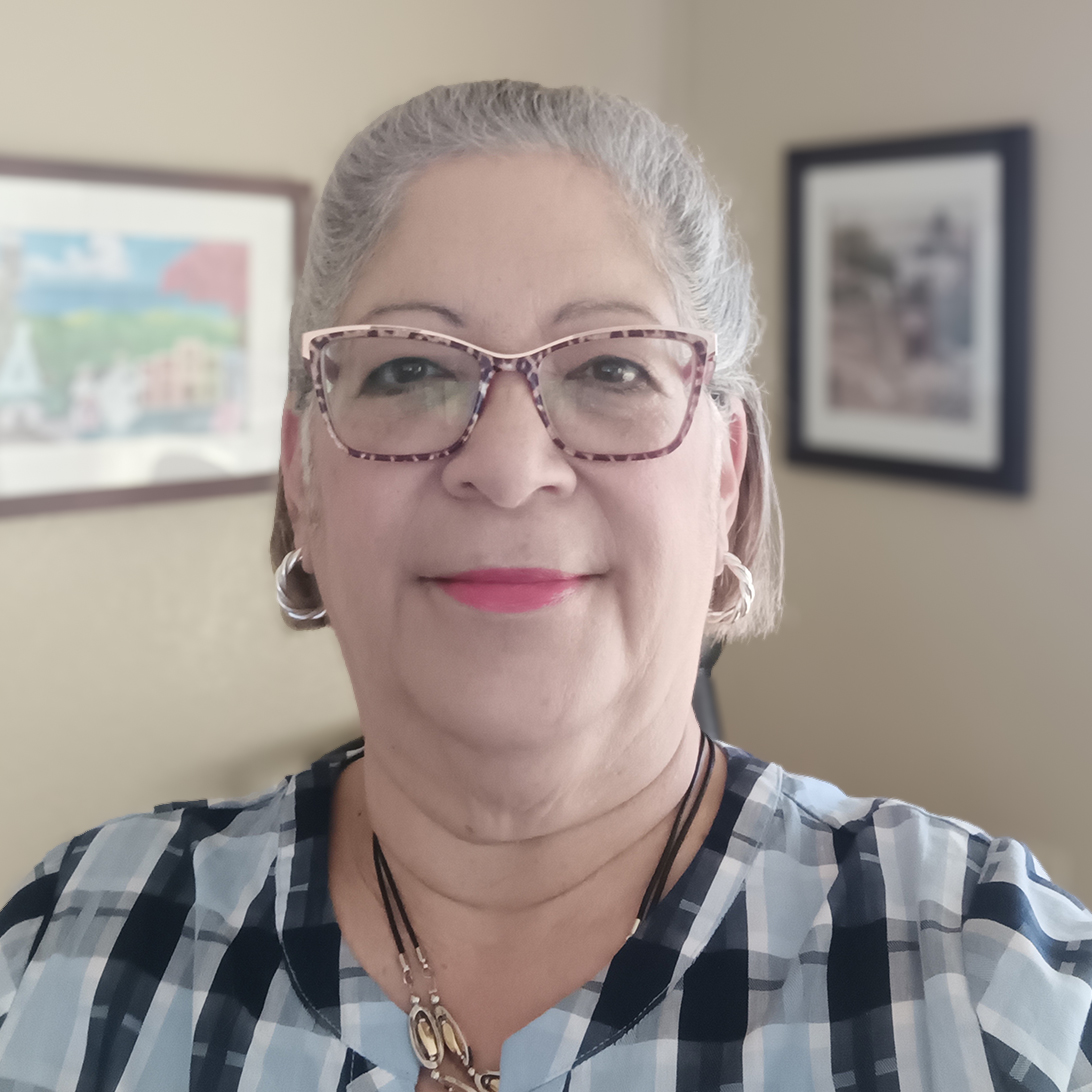
Ruth A. Martinez Valentin is a retired minister who served with the American Baptist Churches of Puerto Rico. She has been married to Antonio Alvarez for 47 years, and they have three adult children and two granddaughters. They moved eight years ago to the San Diego area where both of their daughters live. They became members of the Foundry Community Church seven years ago and are happy their journey led them to this Free Methodist congregation where they can learn, serve, grow and feel welcomed. She has Master of Divinity and Doctor of Ministry degrees from the Evangelical Seminary of Puerto Rico. She loves to spend time traveling with her family, and she also enjoys preaching, reading and writing.
Great Writing + Discipleship Materials