
By Denny Wayman
Imagine that tomorrow morning you decided you were going to become an expert in artificial intelligence. What would you do to accomplish that?
I suppose as a Christian you could say, “I would pray to become an AI expert.” To be clear, I love prayer, and prayer can change more than you and I could even imagine. Prayer could help us become receptive to this new life.
But is that the way God usually works? Does God make a change within our brains in an almost magical way such that we know things about computers, codes, mathematics and machines instantaneously? Is that how God created the mind and the process of maturation and education?
I suppose we would then realize we need to read a book. We could find out what experienced programmers and researchers have discovered, how AI works and how it doesn’t work from the writings of the scholars. We could gain access to “code repositories” and attend lectures and conferences. Reading and listening are perhaps the most effective ways to learn by combining our will with the words as we engage the breadth of scholarship and learn the vocabulary and systems of this profound new artificial life being created.
But if we truly want to become a mature AI expert, we would soon realize that we cannot be satisfied with reading the words on paper that by definition have already happened. We must become engaged in the conversations of the present by living among those who are immersed in the process of AI creation. We must, in actual physical ways, engage the authors, share meals with the coders, and spend long evenings in discussion with the researchers. We must celebrate the moments of insight and grieve the disappointments of failures in real time. We must become one with those who are on the same path of becoming a mature midwife in this moment of birthing AI.
Making Mature Disciples
By now, those reading these words have undoubtedly realized that we’re not so much discussing how one becomes a mature participant in the creation of AI, but how God works to make a mature disciple who participates in the creation of other disciples. It is hopefully helpful to recognize that God’s ways are understandable even when the goal is one of developing a new eternal creature rather than a new artificial intelligence.
_
“We must celebrate the moments of insight and grieve the disappointments of failures in real time.”
Often as a pastor, I have come across persons who think more magically than theologically. It is not that they thought of growing in Christ as a slight-of-hand deception, but rather, they misunderstood the simple process of discipleship as overwhelming, confusing and complex. They did not recognize the familiar patterns of growth seen throughout creation as also being at work within their Christian life. Instead, they looked for the amazing, the instantaneous, and the unexplainable.
In the analogy above, we recognize three levels of activity that lead to a mature disciple. The first is a willingness to receive what God has for us. Prayer is most often the place where this is first apparent as the young believer begins to pray for God’s maturing work within their heart. But willingness is present in every level of the discipleship process: a willingness to read the Book and books, a willingness to be immersed in the community, and a willingness to be a part of the birthing process of new, maturing disciples.
Once willing, it is not wishful thinking that brings maturity, but it is the methodical gaining of knowledge, wisdom, and experience. This is achieved first by becoming a student of the Word, not as a historical document but as a collection of the experiences and testimonies of those who have walked the journey before us. The mind is not transformed magically or instantaneously but by disciplined engagement with the inspired Word and the scholars whose comments produce context and cognitive content.
Then, as mind and heart work together, our willingness to mature as a disciple moves us into community with those who are themselves involved in the very act of being and becoming disciples of Jesus, immersing ourselves into the permeating love of God Almighty — the Father, the Son and the Holy Spirit. Just as noted in our analogy of becoming a truly mature participant in the birthing of AI, living life with those whose core beings are being transformed into becoming like Christ allows us to relationally reinforce this natural process of growth within us.
A person who lives in isolation from the community of faith without the corrective love of the community becomes needlessly idiosyncratic, self-focused and stymied in their discipleship.
Disciples Producing Disciples
Finally, just as in all growth throughout God’s kingdom, living beings birth their own kind. Disciples of Jesus produce disciples of Jesus.
It is just that simple. We need not create complicated new ways of discipling, but rather simply need to be disciples making disciples just as the community of faith has been doing for thousands of years.
+
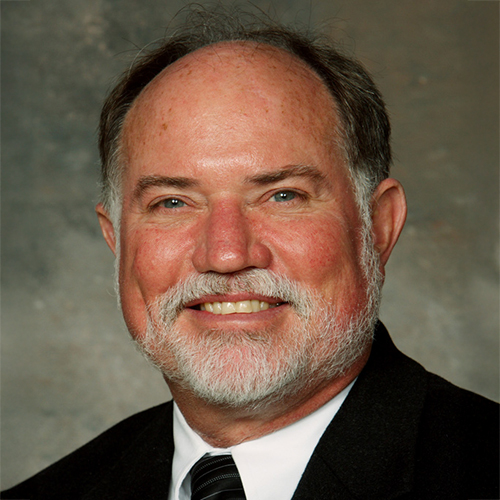
Denny Wayman, D.Min., served 40 years as the lead pastor of the Free Methodist Church of Santa Barbara and 10 years on the superintendent team (eight years as lead superintendent) of the Free Methodist Church in Southern California. He is the author of “Healthy Biblical Communities” and the discipleship trilogy “Discipleship Ecosystem,” “Toxic Discipleship” and “Rootbound.” He is married to Cheryl, a licensed marriage and family therapist.
Great Writing + Discipleship Materials