By Joe Castillo
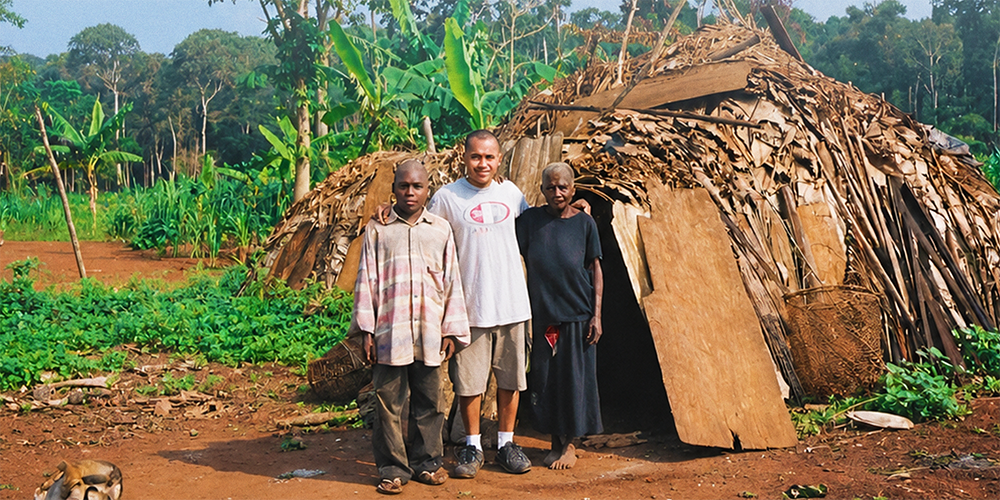
Zamba asked me a question I have never forgotten. We had just carried the gospel to a village neighboring Mayos, the Baka community in eastern Cameroon where my wife, Lilyana, and I had come to live and serve. The people there were eager, hungry even, for what we’d brought them. In the middle of that gladness, Zamba turned to me with a different kind of urgency in his voice. Why, he wanted to know, had it taken so long for us to bring them this message? What grieved him most, he told me, was realizing how many of his own family members had died without ever hearing it.
I didn’t have an answer for what became of those who died before hearing the gospel. That’s not something I can speak to with certainty. But I understood the grief behind his question, and I still think about it today.
I tell you about Zamba first because this isn’t really a story about what Lilyana and I did in Cameroon and Equatorial Guinea. It’s a story about what happened when we stopped being the center of it.
Gifts That Were Already There
A couple of years into learning the language and culture, something began shifting among the Baka. Some in the community had professed faith in Christ, attended the teachings regularly, learned to pray, and helped communicate the lessons to others.
I want to be careful here, because it would be easy to describe this as though we had built something out of nothing. We hadn’t. Zamba, along with Simon, Abele, and Timothy, already had gifts, language ability, relationships, and standing in their communities long before we ever arrived. What was new was the opportunity to put those gifts to use in service of the gospel.
Zamba could read some French, which made him invaluable in translating Bible lessons into Baka — not simply assisting us, but doing real teaching and communication work in two languages at once. His brother, Simon, began recording himself teaching the lessons on audio cassettes, partly from memory, since he was still learning to read so that believers could hear them at Sunday gatherings. Timothy came to us from a village 20 kilometers away, already literate in French with some literacy in Baka too, and stayed with us for about two years of training before returning to plant a church among his own clan.
Pierre, a Bamiléké man who had been adopted into a Baka family and was fluent in the language, began mentoring Timothy — and Pierre understood things about that mentorship that I, as an outsider, simply couldn’t. I supported both men. But the mentorship itself belonged to Pierre.
Together, men and women from the community built a simple meeting place with their own hands — walls of sticks, a roof of coco-tree branches, the first structure built specifically for the Baka church. It wasn’t only the men whose names appear in accounts like this one who raised it. The whole community had a hand in it.
Eventually Pierre received basic linguistic training at an SIL training center, and together Pierre, other missionaries on our team, and I translated 54 chronological Bible lessons into both Baka and French, adapted from an existing chronological Bible-teaching curriculum from the New Tribes Mission Agency. These weren’t a translation of the whole Bible. They were teaching tools meant to carry the major story of Scripture into a form the Baka community could learn, remember, and pass on themselves. Copies of those lessons still exist today. At the time, we had no way of knowing how far that work would eventually travel.
Leaving Without Knowing How the Story Would Continue
Near the end of our first term, our daughter Angie’s severe illness forced my family to leave the field as I stayed behind to prepare the transition to hand over the work to the Baka leaders. I won’t pretend that departure felt like anything other than what it was: painful, disorienting, and full of unfinished business. We had spent four years building relationships, learning a language that still didn’t come easily, and helping lay a foundation we weren’t sure was strong enough to stand without us.
I returned to Cameroon for the first time about a year later, in 2006, and did many trips after that. I want to be honest about how different that felt. For years, Mayos had been our home. Now I was returning as a visitor, a partner, a friend — not the person carrying the weight of every decision. That’s a harder shift than it sounds like from the outside.
Returning brought real mixed emotions. I was grateful to see familiar faces and walk familiar paths, but I also had to admit that life had gone on without us. People had grown. Leaders had made decisions I hadn’t been part of. New relationships had formed. Some people were no longer there, and new missionaries arrived a year later to carry on the work.
That was as it should have been.
The most encouraging thing I saw, across that visit and the ones that followed over the next few years, was that the church had not stopped when we left. Baka believers continued gathering, teaching, praying, and carrying the gospel to others. The work was no longer waiting for us to come back.
Leaders in Their Own Right
Pierre remained central to everything happening in Mayos. By then he had years of studying Scripture, translating lessons, teaching others, and enduring real opposition because of his faith. I want to resist a phrase that would be easy to reach for here — that Pierre had become “my replacement.” That description still places me at the center, as though he were only temporarily filling a role that properly belonged to me. He wasn’t. He was a leader in his own right, and had been for some time.
The same was true of Zamba, Simon, Nesto, Ebote, Abele, Timothy, and the others who had emerged as teachers and servants of the church. Their leadership never came from imitating foreign missionaries. It grew out of their own faith, their own relationships, their own knowledge of their people, and the opportunities they were given to serve.
Coming to terms with that required a different kind of humility than I expected. It’s one thing to say, in principle, that local leadership is the goal. It’s another thing to actually mean it when those leaders make decisions differently than you would have. It’s easy to release responsibility in words while still holding onto control through money, institutional standing, or simple personal influence. I had to learn that trusting leaders meant actually letting them lead — not just letting them carry out my plans on my behalf.
Learning, years later, that Zamba had died brought real grief. I still remember him as a young man who could read French, who helped Lilyana and me move carefully between languages — not just swapping one word for another, but working through meaning, context, whether a lesson actually communicated what we intended. He helped us hear things our own foreign ears simply couldn’t recognize. His life can’t be reduced to the help he gave a couple of missionaries passing through. He was a brother, a teacher, and part of the actual foundation the Baka church was built on.
_
“It’s easy to release responsibility in words while still holding onto control through money, institutional standing, or simple personal influence.”
A Message That Could Travel Without Us
The 54 lessons we’d translated kept being used for evangelism, discipleship, and literacy long after we’d left — some recorded on audio so people who couldn’t yet read could still hear, memorize, and reteach what they’d learned. Desma, a World Team missionary and translator who was legally blind, continued contributing to that work using whatever technology was available to her. Other SIL personnel, Baka language workers, and local partners kept building on that foundation.
I don’t have a complete record of everything eventually produced, and I can’t confirm that the whole Bible has been translated into Baka. What I do know is that the message no longer needed to stay in my notebook or depend on my voice to keep moving. People who’d spoken the language since childhood could teach it and understand their own community’s questions from the inside.
Other missionaries picked up parts of the work too — the Conrod family, deeply involved in developing a training center at Mayos; the Anderton family, giving more than 20 years of service; World Team missionaries who stayed engaged through the years. But telling only the stories of missionaries who came and went would leave the most important part untold. Baka families remained. Local pastors remained. They carried the consequences of every decision and lived with the ongoing needs of their own communities in a way no occasional visit ever could.
One newsletter report that reached me years later described a Christmas Eve service where eight women and one man were baptized, publicly affirming their faith. I don’t have their names or the individual stories behind each decision — only the report itself. But it told me something I needed to hear: the story had kept moving forward, far beyond anything Lilyana and I were present to witness.
What Fruitfulness Actually Looks Like
When I first entered missions, I measured fruitfulness mostly by how many people responded when I preached. That understanding has changed a great deal since then.
The deeper evidence was never that people remembered my name or waited for me to come back. It was that believers kept praying, teaching, translating, baptizing, and carrying the gospel forward long after I was no longer there every day. Pierre and the others never needed to become copies of me. The Baka never needed to become culturally American, or Latino, or European, to follow Jesus faithfully. The gospel could take root in Baka language, Baka relationships, and Baka community life exactly as it was.
I often think about a passage where the Apostle Paul, preparing to leave a group of leaders for good, didn’t commit them to another personality or institution. He committed them to God and to the word of His grace — trusting that to build them up in a way his own continued presence never could. That’s closer to what I experienced watching Pierre, Zamba, and the others carry the Mayos church forward than anything I engineered myself.
Becoming less central doesn’t mean ceasing to love, pray, or stay in relationship. My connection to the Baka didn’t end when we moved back to California; it changed. I stopped being the resident missionary responsible for every decision. I became something more like a partner, checking in from a distance, trusting people I’d come to love with a story that was never actually mine to hold onto in the first place.
There’s a real difference between multiplying leaders and simply extending your own institutional control over a longer distance. One releases gifts that already belong to someone else. The other quietly assumes nothing will hold together unless you stay in charge. I don’t think I always got that distinction right while I was living it. I understand it more clearly now than I did then.
The greatest evidence that the work had taken root in Mayos was never that the Baka still needed me. It was that God had raised people who could teach, translate, pray, and carry the gospel farther than I ever could on my own. The work outlived our season there. By God’s grace, it continues to outlive many of the people who helped begin it — Zamba among them.
_
“There’s a real difference between multiplying leaders and simply extending your own institutional control over a longer distance.”
That, I’ve come to believe, is what faithfulness in pioneering unreached people groups and cross-cultural ministry actually requires: not becoming indispensable, but preparing others well enough that you don’t have to be.
+
Joe Castillo is the lead pastor of 180 City Church in Sylmar (part of the Free Methodist Church in Southern California) and the author of “Beyond the Rain Forest: From the Streets of Los Angeles to the Baka People and the Mission That Continued.” Joe and his wife, Lilyana, began serving as missionaries in 1996. Their ministry took them to Equatorial Guinea and Cameroon, where they lived and served among the Baka people with their family. Joe holds a master’s degree in multicultural studies and a doctorate in global leadership. He has also served as a chaplain with the Los Angeles Police Department since 2009. He remains committed to developing leaders and advancing cross-cultural ministry locally and globally.
Great Writing + Discipleship Materials