By John Carter Adams
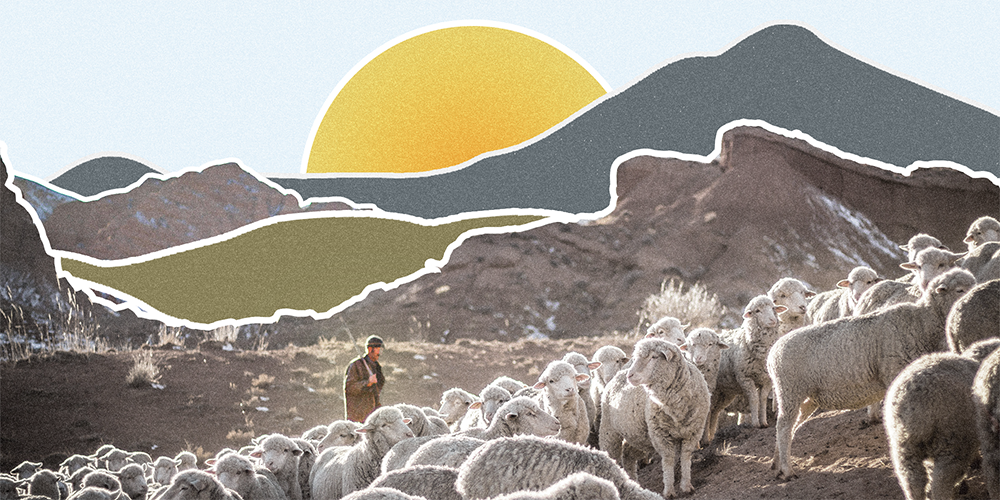
The biblical narrative unfolds as a coherent restoration arc beginning with Yahweh and culminating in new creation. Scripture does not present redemption as an isolated response to human failure, but as the continuation of God’s original shepherding authority over creation. From Genesis to Revelation, the pattern is consistent: Disorder is confronted under rightful authority until ordered dwelling, and the cosmos is fully restored.
The story begins with Yahweh — the Strong Controller who shepherds. Genesis 1:2 describes the earth as “formless and empty, darkness was over the surface of the deep.” This is not rival power but unstructured reality. The Spirit of God “was hovering over the waters,” signaling intentional governance before creative speech. As God speaks, light separates from darkness, waters are bounded, land appears, and life fills structured space. The movement is deliberate: unordered reality becomes bounded, structured, and fruitful.
Yahweh is thus revealed not merely as Creator but as governing Shepherd. He orders space so that life may flourish. Restoration throughout Scripture is not divine improvisation but the continuation of His original ordering purpose.
Into this ordered creation, humanity is placed as image and likeness bearers (Genesis 1:26–28). In the ancient world, an image represented royal authority within a territory. Humanity is, therefore, commissioned as delegated authority under Yahweh’s rule. “Be fruitful and increase in number; fill the earth and subdue it. Rule…” (Genesis 1:28). This is governance language. If Yahweh shepherds creation, humanity is appointed as shepherd-representatives within it. This is also called co-regency. To be clear, image is translated as one who creates order from chaos. All chaos is not bad, but some is. Likeness is translated: to be a secure bridge between heaven and earth or shepherding.
_
“Restoration throughout Scripture is not divine improvisation but the continuation of His original ordering purpose.”
_
The Fall fractures this alignment to be as Yahweh — to create order from chaos and to be a secure bridge between heaven and earth, a shepherd. Authority is not erased but distorted. Genesis 3 depicts breach — a rupture of delegated stewardship. Boundaries collapse and disorder enters sacred space. Sin is not merely rule-breaking; it is misaligned authority or not having the correct audience. Image and likeness remain but require restoration.
Consuming Chaos
The Exodus marks the next major movement in the arc. Egypt embodies systemic disorder (chaos) — oppression, identity distortion, centralized tyranny. When Israel crosses the sea (Exodus 14), the imagery echoes Genesis: Waters yield under divine command. Chaos is restrained through decisive authority.
At Sinai, covenant is established (Exodus 19–20). Torah structures communal life, regulating power, protecting the vulnerable, and ordering worship. The Tabernacle (Exodus 25–40) reintroduces measured sacred space with defined boundaries and central presence. Through Moses (taken from the waters/the consumer of chaos) Yahweh consumes chaos structurally. Covenant establishes localized territorial order under divine rule. Yet law alone cannot permanently resolve internal disorder. Structure stabilizes but does not fully renew.
Between Moses and Jesus stands Israel, whose national vocation sharpens the arc’s intent. Israel is declared “a kingdom of priests and a holy nation” (Exodus 19:6). Work-consume-person-strength-authority; Israel is described as the combination of these pictures.
This might suggest ideas like “Israel is the collective person (‘my son’) whose task is to act with the strength of authority.” Or perhaps we should follow up on the previous idea of destroying the threat of chaos and read these pictographs as “Israel’s work of destroying chaos is found in its strength as authority.”
No matter how the translation of these images is ultimately represented in a sentence, it seems clear that Israel is expected to act in a way that demonstrates its authority by overcoming chaos. Its work is to exhibit as a chosen people what God is capable of doing. Once again, this makes sense in the context of Israel’s exodus. Yahweh calls His people to be His royal priesthood, to act with such obedience that the nations see Yahweh’s hand in the lives of these people and are attracted to Yahweh. Israel’s job is to be the vanguard of those who overcome the chaos of the world, and as such, to be the guiding light for all the nations of the earth. Aviyah Kushner’s comment contains these images: “The name Yisrael is a combination of a verb that means ‘to rule’ in the future tense — yisrah — and el, a noun that means ‘God.’”1
History reveals a central tension: covenantal structure without inward renewal cannot permanently consume chaos. The restoration arc therefore anticipates embodiment.
Jesus enters as fulfillment of Israel’s vocation and embodiment of Yahweh’s shepherding authority. “I am the good shepherd,” He declares (John 10:11). His ministry confronts disorder in every dimension. Natural chaos yields when He commands the storm, “Quiet! Be still!” (Mark 4:39). Spiritual chaos retreats as demons are expelled (Mark 5:1–13). Physical corruption reverses in healing. Social fragmentation is restored in table fellowship. Death (the ultimate completion of chaos) itself is overturned in the resurrection.
The cross exposes the limits of violent power and the ancient gods. The tearing of the temple curtain (Matthew 27:51) signals the end of restricted access to Yahweh. The resurrection declares sovereign authority over death. If Moses structured chaos locally, and Israel resisted it nationally, Jesus consumes chaos cosmically. He is “the image of the invisible God” (Colossians 1:15). Authority is no longer symbolic or mediated; it is incarnate, victorious, and universal. Jesus’ new title is the King who consumes (eats) chaos.
This universal authority is explicitly announced in Matthew 28:18, “All authority in heaven and on earth has been given to me.” The scope is comprehensive. The Great Commission follows: “Go and make disciples of all nations … teaching them to obey everything I have commanded you” (Matthew 28:19–20).
This is not merely individual evangelism. It is structured allegiance formation among territorial and social realities. Nations are discipled through baptism and obedience, establishing ordered communities under Christ’s rule.
Within the restoration arc, Matthew 28 represents authority transfer, territorial expansion, and structured stabilization. The Genesis mandate is reactivated under resurrection kingship and sovereignty. Israel’s vocation is extended globally. The church becomes a mobile covenant community tasked with extending shepherded order into contested space. Discipleship becomes the mechanism through which chaos is consumed at scale.
Revelation 20 portrays final judgment — the ultimate exposure and removal of persistent rebellion (chaos). Disorder that refuses alignment with divine authority is eliminated. Revelation 21 completes the arc: “Then I saw ‘a new heaven and a new earth’… and there was no longer any sea” (Revelation 21:1). The absence of the sea symbolizes the removal of chaos. The city descends and God dwells among His people (Revelation 21:3). The tree of life reappears (Revelation 22:2). There is no temple because divine presence fills all space. Eden becomes city. Sacred space becomes universal habitation. The Shepherd dwells fully within restored creation.
_
“The church becomes a mobile covenant community tasked with extending shepherded order into contested space.”
_
Wesleyan Perspective
This restoration arc resonates deeply with Wesleyan theology. John Wesley consistently described salvation not merely as legal acquittal but as restoration of the image of God. In “The New Birth,” Wesley teaches that regeneration restores the moral image lost in the Fall. In “The Repentance of Believers,” he describes sanctification as progressive renewal into Christ’s likeness. Salvation, in Wesley’s framework, addresses not only guilt but disordered nature. Prevenient grace reflects Yahweh’s initiating shepherding action; sanctifying grace restores internal order.
Howard A. Snyder, Ph.D., extends this Wesleyan theme into ecclesial and missional theology. In “Salvation Means Creation Healed,” Snyder argues that redemption is inseparable from creation’s restoration and that the church participates in God’s renewing purpose for the whole created order. The kingdom of God, in Snyder’s articulation, is not confined to individual salvation but encompasses social, communal, and even creational renewal. This aligns directly with the restoration arc’s territorial dimension in Matthew 28. Discipleship is not abstract belief but structured obedience that reorders life under Christ’s authority.
Thus, Wesley’s emphasis on restored image and Snyder’s emphasis on kingdom renewal converge within the arc: grace restores persons; restored persons participate in reordered communities; reordered communities anticipate new creation. The Great Commission becomes the practical extension of sanctifying grace into social space.
The restoration arc, therefore, unfolds with escalating scope: creation ordered by Yahweh; humanity delegated governance; Moses structuring covenantal stability; Israel embodying national chaos resistance; Jesus consuming chaos at its root; the church extending territorial discipleship; and revelation consummating ordered dwelling.
_
“Discipleship is not abstract belief but structured obedience that reorders life under Christ’s authority.”
_
From beginning to end, Yahweh remains the Strong Controller who shepherds. The Shepherd governs unformed waters, restores fractured image and likeness, commissions global discipleship, and finally dwells within fully ordered creation. The field is never relinquished. The arc closes where it began — with Yahweh inhabiting a world fully aligned under His shepherding authority.
1 Aviyah Kushner, The Grammar of God, p. 67. Taken from Today’s Word by Skip Moen, Ph.D. November 9, 2015. “Mother Tongue.”
+
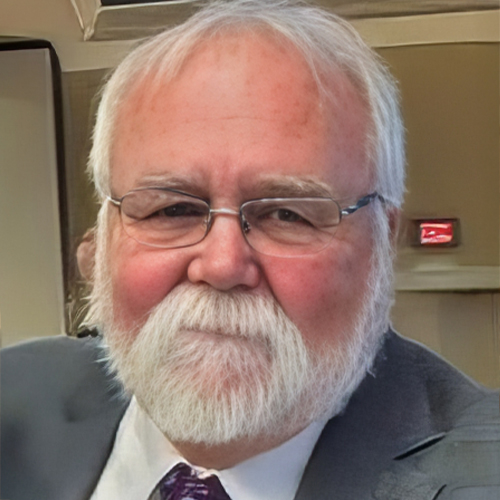
John Carter Adams holds a master’s degree from Wheaton College in evangelism and discipleship. He is the retired vice president of the Institute for Emerging Itinerant Evangelists, a ministry of East West Ministries International in Plano, Texas.
Great Writing + Discipleship Materials