
By Heather Baker Utley
Chloe Kim is a 26-year-old female American snowboarding pioneer, the first woman to ever win two snowboarding halfpipe Olympic gold medals. While Chloe was competing a decade ago, she met 9-year-old Gaon Choi, a South Korean girl who wanted to compete like Chloe. Kim’s family took Choi’s family under their wings and supported their journey.
This meeting came full circle at the 2026 Olympics when Gaon Choi overtook Chloe Kim to earn the Olympic halfpipe gold medal. Choi also replaced Kim as the youngest woman to win the halfpipe gold medal. Chloe Kim invested in Gaon Choi, who ultimately surpassed her.
As ministers and church leaders, we are called to be disciple makers. Many churches are built around an irreplaceable superstar or beloved shepherd who’s hard to replicate. These leaders may have followers, but they may not make disciples. Jesus, for all His ability to draw in the crowds, focused His time on disciples who built a church that outlasted His physical time on earth. In the book of Luke, I see three essential steps to becoming more like Jesus in how we make disciples: surrendering our formation fully to the Holy Spirit, faithfully apprenticing Jesus’ ways, and cultivating communities of apprenticeship that outlast us.
_
“Many churches are built around an irreplaceable superstar or beloved shepherd who’s hard to replicate. These leaders may have followers, but they may not make disciples.”
1. Surrender our formation to the Holy Spirit.
Before Jesus began His earthly ministry, he fasted in the wilderness for 40 days. After that time, “Jesus returned to Galilee in the power of the Spirit” (Luke 4:14). For Christian believers who have surrendered our lives to follow Jesus, the same power that Jesus used to do miracles is now present in us: “And if the Spirit of him who raised Jesus from the dead is living in you, he who raised Christ from the dead will also give life to your mortal bodies because of his Spirit who lives in you” (Romans 8:11).
In Luke 4, Jesus commences His earthly ministry by reading the scroll of Isaiah:
“The Spirit of the Lord is on me, because he has anointed me to proclaim good news to the poor. He has sent me to proclaim freedom for the prisoners and recovery of sight for the blind, to set the oppressed free, to proclaim the year of the Lord’s favor.”
(Luke 4:18–19, quoting from Isaiah 61:1–2)
God’s Spirit wasn’t upon Jesus so He could build the best Christian nation, gain earthly power, or accumulate wealth to philanthropically bless others. He was called to proclaim good news, proclaim freedom, heal, set people free, and proclaim the life to come. If we’re becoming like Jesus, by the power of God’s Spirit, we will do these things too.
Ask God: “Am I being filled by Your Spirit, or am I relying on my own talents and preferences?” If the Spirit of Him who raised Jesus from the dead is living in us, then God may call us to go places and meet people that disrupt our preferences.
2. Faithfully apprentice Jesus’ ways (Luke 5).
The Christian teacher Dallas Willard said, “The greatest issue facing the world today, with all its heartbreaking needs, is whether those who, by profession or culture, are identified as ‘Christians’ will become disciples — students, apprentices, practitioners — of Jesus Christ, steadily learning from him how to live the life of the Kingdom of the Heavens into every corner of human existence” (“The Great Omission”).
After we surrender to God’s Spirit, then we begin doing what Jesus did. In Luke 5, “Jesus went out and saw a tax collector by the name of Levi sitting at his tax booth. ‘Follow me,’ Jesus said to him, and Levi got up, left everything, and followed him” (v.27–28). In Jesus’ case, He literally meant “Follow me.”
In Jesus’ day, when a disciple was invited to follow a rabbi, the disciple would walk so closely behind the rabbi that he or she would become covered by the dust billowing up from the rabbi’s feet. Many people read and sing about Jesus without becoming fully immersed in His way as the way of life. They’re not getting close enough to get dirty. They’re not hearing that directive to go to Ninevah.
In John Mark Comer’s book “Practicing the Way,” he shares a helpful framework for faithfully apprenticing Jesus. After being rooted in the Holy Spirit, we intentionally seek formation in three spaces: teaching, community, and practice.
Let’s start with teaching. Our first teacher is always Jesus Himself. Don’t be just content with the things God first said to you 10 or 20 years ago. What Scriptures are shaping you today? How is God humbling you now or empowering you now?
Our secondary teachers should be trusted Christian teachers. Too many Christians are covered with the dust of news pundits and podcasters who use Christian words but don’t embody these verses from Luke or show the fruit of the Spirit. If we’re following thought leaders so closely that we’re covered in their dust, then we’re being led away from mature faith in Jesus. We need to be listening to teachers who lead us toward Jesus’ example: who empower women and extend love and care for marginalized people. Ask God to reveal to you if there are any teachers you need to walk away from because they are leading you astray.
Next, we are formed by our community. For ministry leaders, our community isn’t just the people we see on Sundays. It’s the people who know what our living room looks like and know our grumpy voice and show up for us on hard days. It’s the people who can let us know when we aren’t becoming like Jesus.
_
“If we’re following thought leaders so closely that we’re covered in their dust, then we’re being led away from mature faith in Jesus.”
In addition to building relationships with my colleagues in my ministry teams, I spend time weekly investing in a personal support community of fellow ministers, people who can see all my unfiltered mess. I met many of these people through church planting and networks like Wesleyan Holiness Women Clergy. Over a decade ago, we started a weekly gathering on Zoom, and we leave and receive storytelling and encouragement over long audio messages on WhatsApp and Voxer. This year I also recruited both a ministry coach and counselor to help me mature as a disciple and leader.
Our community is vital to forming us to be more like Jesus through accountability, encouragement, care, and truth telling.
Lastly, we are formed by our practices. In “Batman Begins,” Rachel Dawes told Bruce Wayne, “It’s not who you are underneath, but what you do that defines you.” Christianity is more than just loving Jesus in our hearts; we are also to be practicing Jesus’ way. We must set aside our phones, listen to the Spirit, and do as Jesus did.
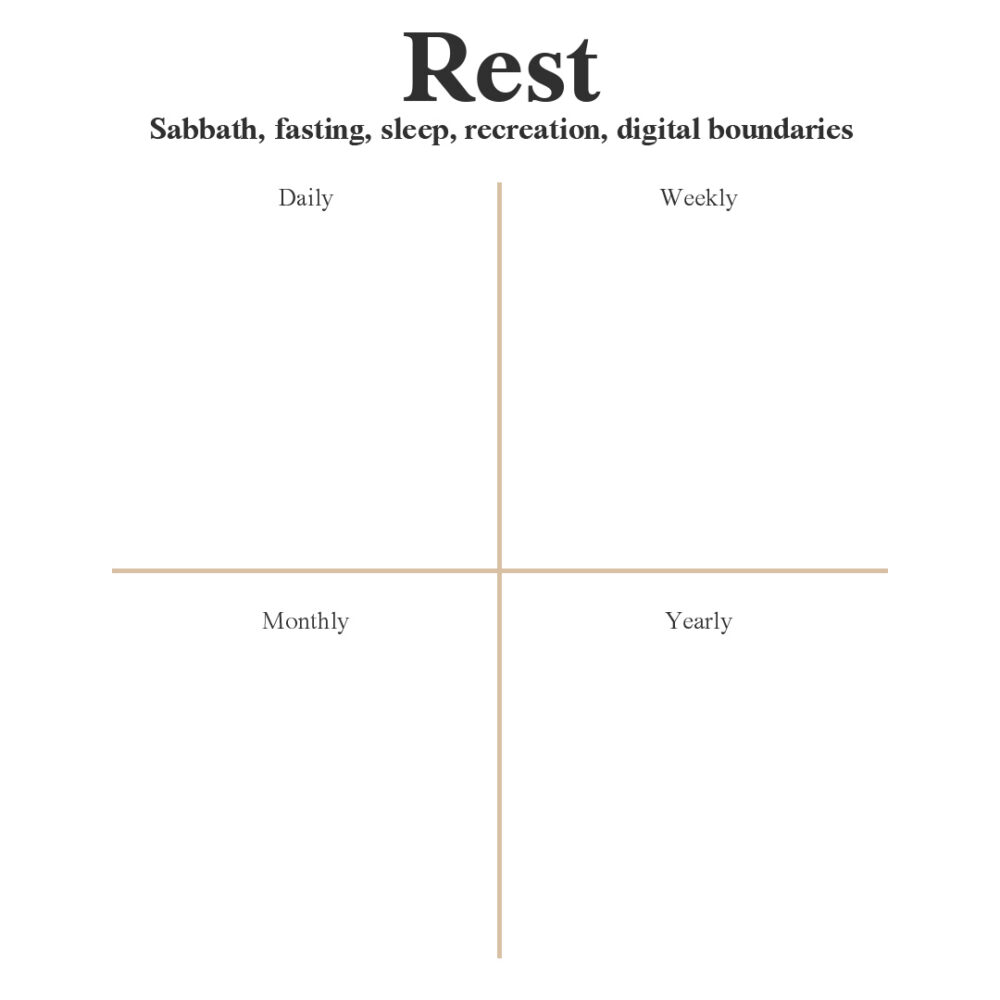
Jesus took naps and spent times of solitude in prayer and fasting. Look at your rhythms of life and ask God what He wants you to stop and what He wants you to start. Recording our intended disciplines as a “rule of life” helps us to be more aware of them, and sharing them with our close community of friends gives us the needed intentionality and accountability to live them out. Ask your community how they are practicing becoming more like Jesus this month and share yours as well.
3. Cultivate communities of apprenticeship.
Comer’s model of formation can apply not only to our own apprenticeship of Jesus. It can also inform how we cultivate communities of apprenticeship.
To begin community formation, we see Jesus intentionally gathered a group of people who came from different education levels and belief systems, fishermen and tax collectors. Think of Simon the Zealot, an adherent to a movement that viewed paying taxes as treason against the true king — Yahweh. Jesus put anti-taxation Simon into a discipleship community with Matthew the tax collector (Luke 6:12–16).
Jesus didn’t just call His disciples in for one-on-one mentoring; He formed a community that made a new creation in Christ. Through this, the disciples learned how to work through disagreement and love one another well. It’s critical for us to build communities of people who don’t just follow the leader, but who learn to practice love, conflict, forgiveness, and faithfulness with one another.
Next, we’re forming disciples through teaching. Jesus taught His disciples right belief and right practice. He taught them the parables and the sermons. He answered their questions. He shared a new understanding of the law and the Messiah. This wasn’t a 20-year Bible study; this teaching was a 3-year intensive. At the end of Luke, “Then he opened their minds so they could understand the Scriptures…” (Luke 24:45–49), which we see evidenced in very fruitful ministry in the book of Acts. His teaching gave His disciples a solid foundation, rooted in the Spirit, and He quickly gave them the ability to do what He did.
This leads to the last piece of formation: Jesus created disciples who could do what He did because they practiced. He let them practice the work of ministry while He was still with them, so that they could do it without Him. That included giving them the authority to do what He did:
“When Jesus had called the Twelve together, he gave them power and authority to drive out all demons and to cure diseases, and he sent them out to proclaim the kingdom of God and to heal the sick…” (Luke 9:1–6).
This means that as disciple makers, we aren’t just creating assistants to help us do our thing; we are teaching people so that they can ultimately do their thing. Home Depot advertises: “You can do it. We can help.” Ministry leaders should have conversations with Jesus’ disciples to say, “I see in you that God has gifted you. You can do it. I can help.”
The Kansas City Underground uses a 4-stage Discipleship Square for apprenticing leaders:
- First: I do and you watch
- Next: I do and you help
- Then: You do and I help
- Finally: You do and I watch
To build a church that outlasts us, the leader becomes the chief equipper, raising up a few apprentice teachers and coaches who raise up disciples who become missionaries to their neighborhoods and networks.
Closing Thoughts
Last month our family locked in for the 2026 NBA playoffs, inviting friends, colleagues and neighbors into a new community. We watched our hometown San Antonio Spurs defeat the defending champions to win the Western Conference championship and become the second-youngest team of starters to reach an NBA Finals. (Congrats to the Knicks who win the big prize!)
I was shocked to realize both the Spurs’ and Knicks’ head coaches were assistant coaches under legendary Spurs head coach Gregg “Pop” Popovich. Currently, there are six head coaches and dozens more across the pro leagues who were players or assistant coaches of Pop. Those six coaches have nine league championships between them.
Thinking of Gregg Popovich and Chloe Kim makes me wonder: Why are coaches and athletes doing a better job of equipping and raising up the next generation of leaders than the church is? Making disciples isn’t just a part of our job; it’s the job. It asks us to get messy, covered in the dust of walking closely alongside others.
Ralph Moore is a disciple-making pastor who founded Hope Chapel and is directly responsible for 700 churches being planted. He says, “Disciple making invades your personal space. You share your own failings, victories, and insights with another person. A good disciple maker invites His disciple to help with ministry, then do ministry on their own while the disciple maker applauds the effort.”
_
“Why are coaches and athletes doing a better job of equipping and raising up the next generation of leaders than the church is?”
Chloe Kim raised up Gaon Choi.
Gregg Popovich raised up six successful head coaches.
Ralph Moore developed 700+ church plants by raising up thousands more church planting leaders.
Remember: We can become mature Christian leaders by surrendering our formation fully to the Holy Spirit, faithfully apprenticing Jesus’ ways, and cultivating communities of apprenticeship that outlast us. Now is the perfect time to begin preparing your apprentice leaders to move from watching you do what you do to practicing the things that you do.
Who is God asking you to raise up? What new community is He calling you to create?
+

Heather Baker Utley serves as the assistant superintendent of The River Conference and a teaching pastor at The Park Community Church in San Antonio, Texas. Prior to that, she and her husband, Clay, planted a church in San Antonio and served in family ministries in two churches in Washington state. She is a graduate of Taylor University and Seattle Pacific Seminary (M.Div.). She and Clay have two teen boys.
Great Writing + Discipleship Materials